
ORAL SURGERY · PLUX DENTAL
Wisdom Teeth (Gigi Bongsu): When Do They Actually Need Removing?
There is a widespread assumption that wisdom teeth automatically have to be removed. They do not. Plenty sit perfectly well for a lifetime. The useful question is not whether you have them — it is whether yours are causing problems, or clearly going to.
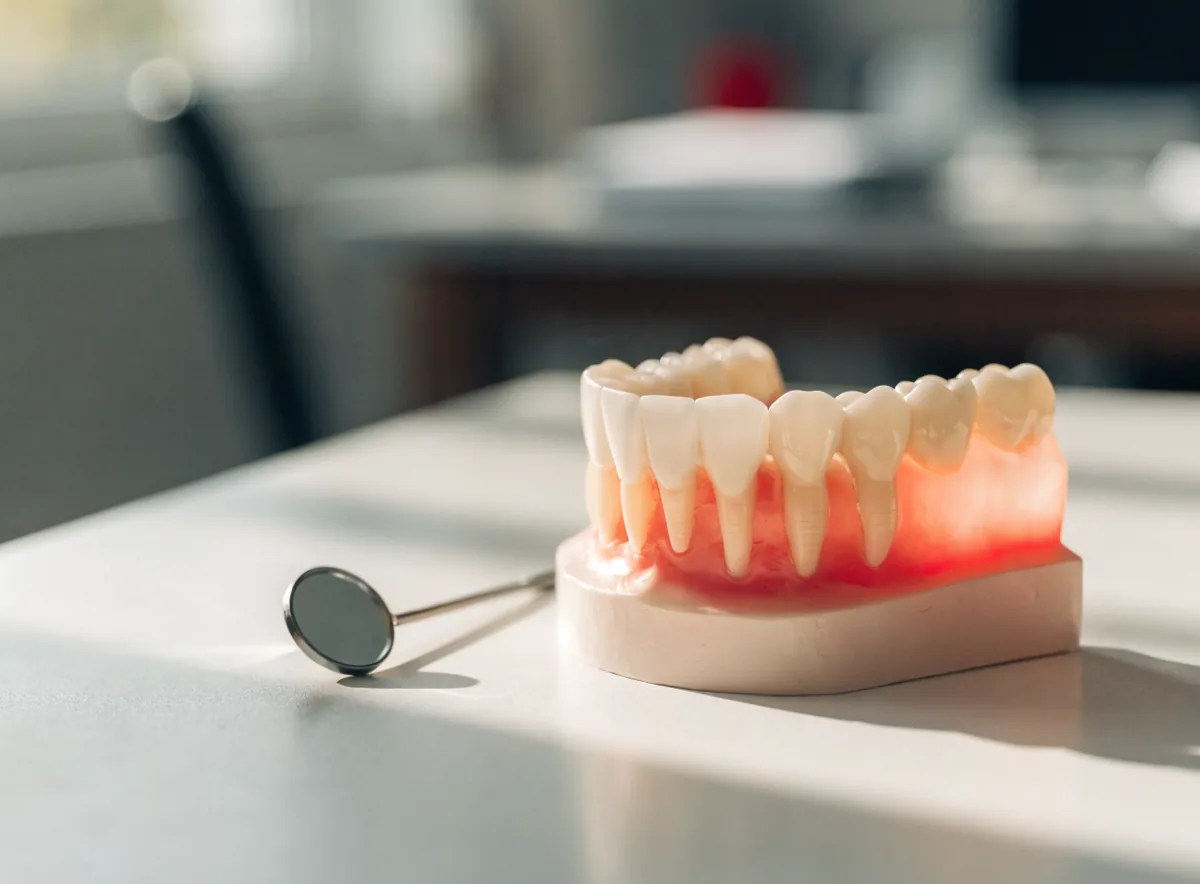
Wisdom Teeth Are Just Molars
Wisdom teeth are the third molars, the last to arrive at the back of your mouth, usually between the late teens and mid-twenties. Where the jaw has enough room, they erupt upright, function normally, and need nothing beyond ordinary brushing.
Problems begin when the teeth do not have enough room. The tooth becomes impacted — stuck partly or fully under the gum, or wedged against the molar in front. Impacted wisdom teeth are the source of nearly every wisdom tooth complication; the teeth simply existing is not.
Common Signs Wisdom Teeth Are Causing Problems
- Repeated infection — pericoronitis, where the gum flap over a partly erupted tooth traps bacteria and swells painfully, often more than once
- Decay that cannot be restored — wisdom teeth sit far back and are hard to clean and hard to fill well
- Damage to the tooth in front — an angled wisdom tooth can decay or resorb the healthy second molar, a considerably more valuable tooth
- Persistent gum inflammation — around a tooth you simply cannot keep clean
- A cyst or other pathology — uncommon, but a clear indication for surgical removal
- Pain, swelling, or jaw stiffness — particularly if it keeps returning
When Wisdom Teeth Do Not Need to Be Removed
A wisdom tooth that is fully erupted, functional, cleanable, and causing no symptoms generally does not need removing. Neither does one fully buried in bone with no sign of pathology — those are usually monitored with periodic X-rays instead.
Every wisdom tooth extraction carries some risk and some recovery. Removing teeth that are doing no harm means accepting both for no benefit. That is a poor trade, and nobody should be talked into it.
See a dentist promptly if you have:
Swelling in the jaw or face, difficulty opening your mouth, worsening rather than settling pain, a bad taste with pus, fever alongside dental pain, or difficulty swallowing. These suggest active infection around a wisdom tooth and should not be waited out. Call the clinic on +60 11-6140 8009.
How the Decision Is Made
From an examination and an X-ray — usually a panoramic view showing all four wisdom teeth, their angle, how much room exists, and their relationship to the nerve running through the lower jaw. That last point is central to assessing the risk of removal, and it is why this decision cannot be made by looking in the mouth alone.
What you should be told before deciding: whether the tooth is causing a problem now, whether it is likely to, what removal would involve in your specific case, the risks, and what happens if you choose to monitor instead.
What Wisdom Tooth Surgery Involves
Difficulty varies enormously. A fully erupted upright wisdom tooth may be a straightforward extraction under local anaesthetic. A deeply impacted tooth lying sideways near the nerve is surgical removal requiring proper planning, and in some cases referral to an oral surgeon. Those are very different appointments, and you should know which one you are having — and its cost — before the day.
Afterwards, a blood clot forms in the tooth socket and protects it while it heals. Protecting that clot — no smoking, no vigorous rinsing, no straws for the first days — is the single most important thing you can do to avoid a painful dry socket.
Common Questions
Do all wisdom teeth need to be removed?
No. A wisdom tooth that is fully erupted, cleanable and causing no problems usually does not need removing, and one fully buried in bone with no sign of disease is often monitored with periodic X-rays instead.
How long does recovery take after wisdom tooth removal?
Most people feel noticeably better within a few days, with the gum healing over one to two weeks. Surgical removal of an impacted tooth usually takes longer to settle than a simple extraction, and your dentist will tell you what to expect for your case.
What is dry socket?
Dry socket happens when the blood clot protecting the socket is lost, leaving the bone exposed and causing pain that gets worse a few days after the extraction. Avoiding smoking, straws and vigorous rinsing for the first days helps protect the clot.
Is wisdom tooth removal painful?
The procedure is done under local anaesthesia, so you should feel pressure rather than pain. Some soreness and swelling afterwards is normal and is usually managed with the pain relief your dentist advises.
Can a wisdom tooth damage the tooth in front of it?
Yes. A wisdom tooth angled against the second molar can trap food and plaque and cause decay or damage to that tooth, which is one of the clearer reasons to consider removal.
Related Reading
Wisdom Teeth Giving You Trouble?
Send us a message describing the symptoms. We will tell you honestly whether they need removing or whether they can be watched.
WhatsApp +60 11-6140 8009