
ORTHODONTICS · PLUX DENTAL
Clear Aligners vs Traditional Braces: An Honest Comparison
Most people arrive having already decided they want clear aligners, usually because they are nearly invisible. That is a fair reason. It is just not the only one that matters — and for some cases of teeth straightening, it is not the one that decides.
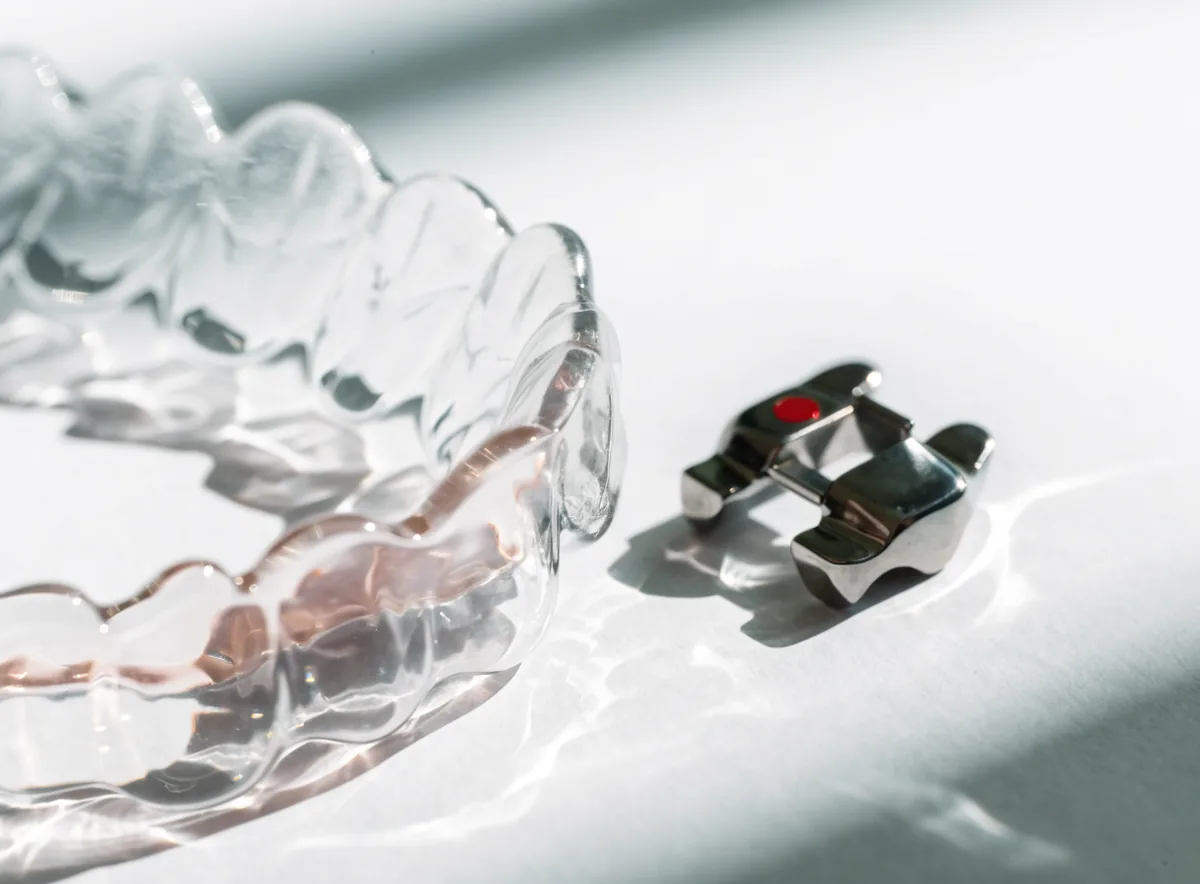
Both Are Orthodontic Treatment — They Just Work Differently
Fixed braces and clear aligners both move teeth by applying gentle, sustained pressure over months. Traditional braces do it with a bracket bonded to each tooth and an archwire the dentist adjusts at each visit. Clear aligners do it with a series of custom removable trays, each slightly different from the last, changed every one to two weeks.
The biology of tooth movement is identical. What differs is control, visibility, and how much of the outcome depends on you. At Plux Dental, we provide clear aligner treatment in-house; if fixed braces are a better fit for your case, we will let you know and refer you to a trusted orthodontist.
Types of Braces and Aligners
- Metal braces — stainless steel brackets and wire. The most predictable and widely used fixed option
- Ceramic braces — tooth-coloured brackets, far less visible than metal, though more brittle and typically dearer
- Lingual braces — fixed behind the teeth so they are hidden from the front; not suitable for every case
- Clear aligners — removable transparent trays, changed every one to two weeks as your smile shifts gradually into place
Where Clear Aligners Are Genuinely Better
- Appearance — they are difficult to notice, which for many adults is the deciding factor
- Eating — aligners are removable, so nothing is off the menu
- Oral hygiene — you brush and floss normally, which makes protecting gum health considerably easier than with fixed braces
- Comfort — no brackets or wires rubbing the inside of the lip
- Fewer emergencies — nothing to come loose at an inconvenient moment
Where Fixed Braces Still Win
- Complex tooth movement — significant rotations, moving roots into position, and large bite corrections are often more predictable with fixed braces
- Nothing depends on memory — braces work whether or not you remember anything, which matters more than most people expect
- Severe crowding or spacing — where the amount of movement required is substantial
The honest catch with clear aligners
Aligners only work while they are in your mouth. Most systems require 20 to 22 hours of wear a day, removed only for eating and cleaning. Patients who wear them less do not simply get a slower result — they often get an incomplete one, and the treatment plan has to be reworked. If that level of discipline is unrealistic for you, fixed braces are not a downgrade. They are the more honest choice.
Treatment Duration and What to Expect
Treatment duration for both braces and clear aligners typically runs from several months to a couple of years, driven mainly by how far the teeth need to travel. Both need regular review appointments — to adjust the wire in the case of braces, or to check progress and issue the next sets of aligners.
Where a case needs fixed braces, or is otherwise too complex for clear aligners, we will say so and refer you to a trusted orthodontist rather than stretching a treatment plan to fit what does not suit your case.
What Actually Decides It
In practice three things decide, in this order: what your case clinically requires, how much you can commit to wearing a removable appliance, and then appearance. When those point in different directions, we say so rather than simply selling whichever you walked in asking for.
Some cases are well suited to clear aligners, and we will tell you plainly if yours is not — recommending a referral rather than a treatment that is not the right fit for you.
True for Both
- Health comes first — decay and gum disease are treated before any tooth is moved
- Retainers are not optional — teeth drift back. Retention is part of orthodontic treatment, not an add-on
- Suitability is assessed individually — no honest answer is possible without an examination and imaging
Common Questions
Are clear aligners as effective as braces?
For many mild to moderate cases, yes. For complex movements such as large rotations or major bite correction, fixed braces are often more predictable. Suitability is decided with an examination and imaging, not by preference alone.
How many hours a day do clear aligners need to be worn?
Most aligner systems need 20 to 22 hours a day, removed only for eating and cleaning. Wearing them less does not just slow treatment down; it often leaves the result incomplete.
Do clear aligners hurt?
Most people feel pressure or tightness for a day or two after switching to a new set, which is a sign the teeth are moving. It usually settles quickly.
Do I need a retainer after aligners or braces?
Yes. Teeth tend to drift back after any orthodontic treatment, so a retainer is part of the treatment rather than an optional extra.
Does Plux Dental provide braces?
We provide clear aligner treatment in-house. If fixed braces would suit your case better, we will tell you and refer you to a trusted orthodontist.
Related Reading
Not Sure Which Suits You?
Tell us what bothers you about your teeth and we will assess whether both options are genuinely open — honest advice either way.
WhatsApp +60 11-6140 8009