
AESTHETIC GUIDE · PLUX DENTAL
Veneers vs Crowns: What Is the Difference, and Which Do You Need?
Veneers and crowns are both custom-made, tooth-coloured restorations, and both can transform a smile, which is why they are so often confused. The real difference is simple: a veneer changes how a healthy tooth looks, while a crown rebuilds a tooth that has lost its strength. This guide explains how the two compare, when each is the right choice, and how your dentist decides tooth by tooth.
The Short Answer
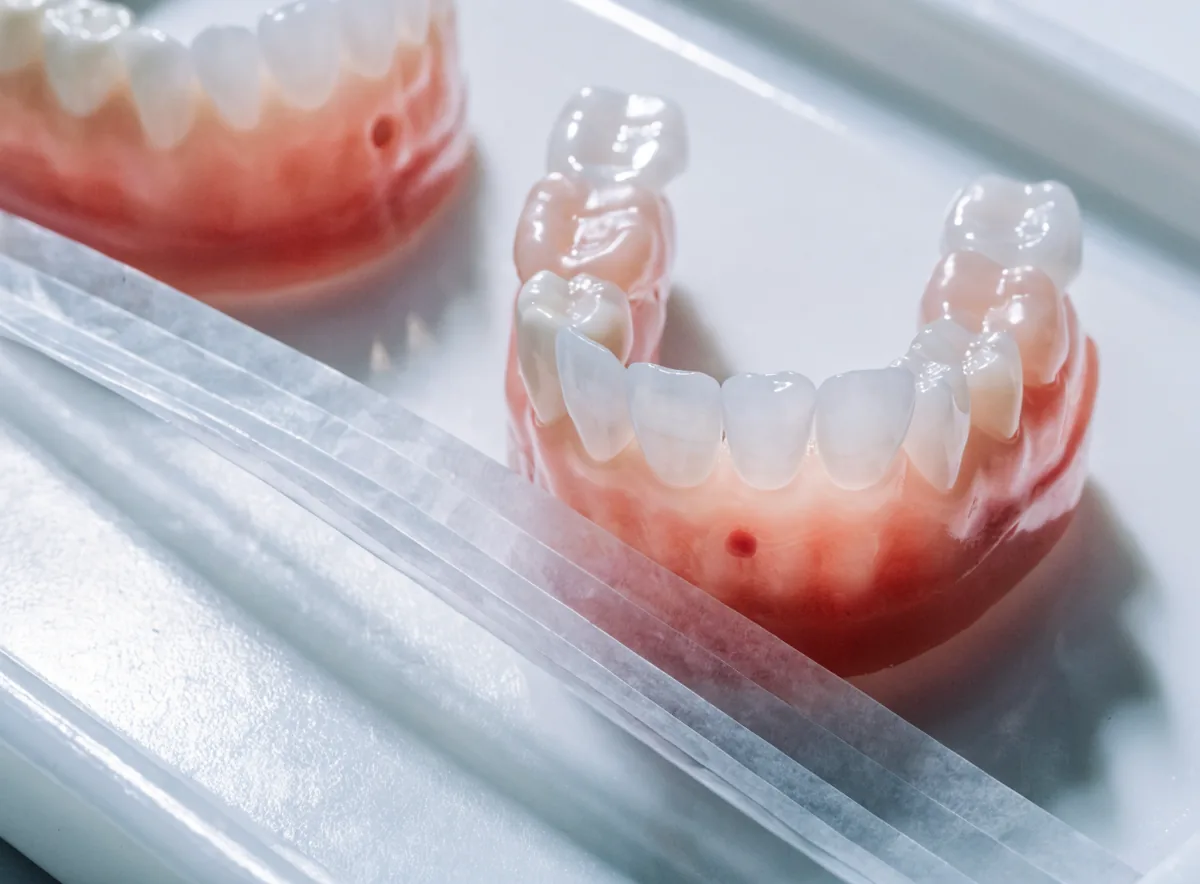
A veneer is a thin shell bonded to the front surface of a tooth to change its colour, shape or size. A crown, often called a cap, covers the entire tooth to restore its strength and function. If the tooth is structurally healthy and the concern is cosmetic, a veneer is usually the more conservative choice. If the tooth is cracked, heavily filled, root-treated or badly worn, a crown is usually the sound one.
The decision is made one tooth at a time, not one smile at a time, and many patients end up with a mix of both, planned together so the shades match.
What Is a Dental Veneer?
A dental veneer is a thin layer of tooth-coloured material that covers only the visible front surface of a tooth. Porcelain veneers are made in a dental laboratory and bonded at a second visit; composite veneers are sculpted directly onto the tooth from resin, often in a single appointment. Because a veneer covers just the front, it preserves most of the natural tooth structure. In cosmetic dentistry, veneers are used to correct discolouration that whitening cannot lift, chips, small gaps and uneven or worn edges. Our dental veneers page covers the treatment in full.
What Is a Dental Crown?
A dental crown is a custom-made cap that encases the whole visible part of a tooth, down to the gum line. It holds a weakened tooth together, restores its shape and bite, and protects it from further damage. Options include all-ceramic crowns, zirconia crowns, porcelain-fused-to-metal crowns and metal crowns, and the material is chosen according to where the tooth sits and how much biting force it takes. To make room for a crown, the tooth is reshaped on all sides, which is why crowns are reserved for weakened teeth whose structural integrity needs restoring. Read more on our crowns and bridges page.
Key Differences Between Veneers and Crowns
- Coverage — a veneer covers the front surface only; a crown covers the whole tooth
- Main purpose — veneers are mainly cosmetic; crowns restore strength as well as appearance
- Tooth preparation — porcelain veneers remove a thin layer of front enamel and composite veneers may need none; a crown needs the tooth reduced on every side
- Strength — a crown gives far more protection to a weakened tooth; a veneer relies on healthy enamel underneath
- Best suited to — veneers for healthy front teeth; crowns for damaged, root-treated or heavily filled teeth, front or back
- Materials — veneers in porcelain or composite resin; crowns in ceramic, zirconia, porcelain fused to metal or metal
- Visits — composite veneers often one; porcelain veneers and crowns usually two, with a laboratory stage between
- Lifespan — porcelain veneers and crowns commonly a decade or more with good care; composite veneers typically four to eight years
- Reversibility — porcelain veneers and crowns are both permanent commitments once the tooth is prepared
When a Veneer Is the Better Choice
- The tooth is healthy — no large fillings, cracks or active decay, with plenty of sound enamel to bond to
- The concern is appearance — stains that whitening cannot shift, chips, small gaps, short or uneven edges
- You want to keep as much natural tooth as possible — a veneer preserves far more tooth structure than a crown
- It is a front tooth — veneers are designed for the teeth that show when you smile
When a Crown Is the Better Choice
- The tooth is cracked or broken — a crown holds the tooth together and spreads biting forces
- There is a large filling — when more of the tooth is filling than tooth, there is too little enamel left for a veneer to hold
- The tooth has had root canal treatment — root-treated teeth, especially back teeth, can become brittle and often need full coverage
- The tooth is badly worn or decayed — a crown rebuilds shape and function that a thin veneer cannot
- It is a back tooth — molars take heavy chewing forces that veneers are not designed for
Front Teeth: Veneer or Crown?
For front teeth, both options can look entirely natural, so the choice comes down to what is underneath. A front tooth that is sound but discoloured, chipped or slightly misshapen is usually a veneer case. A front tooth with a large old filling, a crack running through it, or significant loss of structure is usually better protected by a crown. A front tooth that has darkened after root canal treatment is assessed individually: depending on how much healthy tooth remains, it may suit a veneer, a crown, or internal whitening first.
Your bite matters too. Teeth that meet edge to edge, or a habit of grinding, put extra stress on veneers, and your dentist may recommend a crown on some teeth, or a night guard to protect the veneers.
Back Teeth: Almost Always a Crown
Veneers are made for the front teeth. Molars and premolars do most of the chewing and take forces that a thin shell bonded to one surface cannot withstand. When a back tooth needs more than a filling, the options are usually a crown or, for smaller damage, a partial restoration such as an onlay. A back tooth that has had root canal treatment is commonly crowned to protect it from fracture.
How Much Tooth Is Removed?
This is one of the most important differences. For a porcelain veneer, a thin layer of enamel is removed from the front of the tooth only, typically about the thickness of a fingernail. Composite veneers often need little or no reduction at all. For a crown, the tooth is reshaped on all sides so the crown can fit over it, which removes considerably more natural tooth. In both porcelain veneers and crowns the change is permanent: the tooth will always need a covering afterwards. This is why dentists prefer a veneer whenever the tooth is healthy enough to allow it.
The Procedure: Getting a Veneer vs Getting a Crown
- Composite veneer — the tooth surface is conditioned and resin is layered, shaped and polished directly on the tooth, usually in one visit and often without anaesthetic
- Porcelain veneer — a thin layer of front enamel is prepared under local anaesthetic where needed, an impression or scan goes to the laboratory, and the veneer is bonded at a second visit about one to two weeks later
- Crown — the tooth is examined and X-rayed, root canal treatment or a core build-up is done first if needed, the tooth is reshaped on all sides under local anaesthetic, a temporary crown is fitted, and the permanent crown is cemented about one to two weeks later
Which Lasts Longer: Veneers or Crowns?
With good care, porcelain veneers and crowns both commonly last a decade or more, while composite veneers typically serve for around four to eight years before they need polishing, repair or replacement. In practice, how long either lasts depends less on the label and more on the tooth underneath, your oral hygiene, your bite, and habits such as grinding, biting nails or using your teeth to open packets. Results vary between patients.
Why a Dentist Might Advise Against Veneers, or Recommend a Crown
A good dentist will sometimes talk you out of veneers. The usual reasons are that the teeth are healthy and whitening alone would achieve what you want, that the teeth are crowded and clear aligners would give a better result with less drilling, or that active decay or gum disease needs treating first. Equally, recommending a crown is not about doing more treatment: when a tooth is cracked or mostly filling, a veneer would have nothing strong to hold on to and would be likely to fail. The aim is always the least invasive option that will last.
Can a Tooth Still Decay Under a Veneer or Crown?
Yes. The veneer or crown itself cannot decay, but the natural tooth underneath still can, usually at the margin where the restoration meets the tooth near the gum line. Daily brushing with a fluoride toothpaste, cleaning between your teeth, and regular check-ups and scaling keep those margins healthy and let your dentist spot any problem early.
What Affects the Cost of Veneers and Crowns?
Veneer and crown fees vary between clinics and between patients, because the work involved differs so much from one tooth to the next. The main factors are:
- Material — composite, porcelain, ceramic, zirconia or porcelain fused to metal, each with different laboratory and clinical work
- Number of teeth — a single tooth matched to its neighbours is a very different plan from a full smile zone
- Condition of the tooth — whether root canal treatment, a core build-up or gum treatment is needed first
- Laboratory craftsmanship — custom shading and layering for front teeth takes more time and skill
- Preparatory treatment — whitening, scaling or aligner treatment planned before the final restorations
If you have dental insurance or a company panel, coverage is generally more likely for a crown that restores a damaged tooth than for veneers placed for cosmetic reasons; check the terms with your provider before treatment.
Treatment fees vary depending on the complexity and individual clinical needs of each patient. A personalised treatment plan and quotation will be provided following your dental assessment.
Can You Have Both Veneers and Crowns?
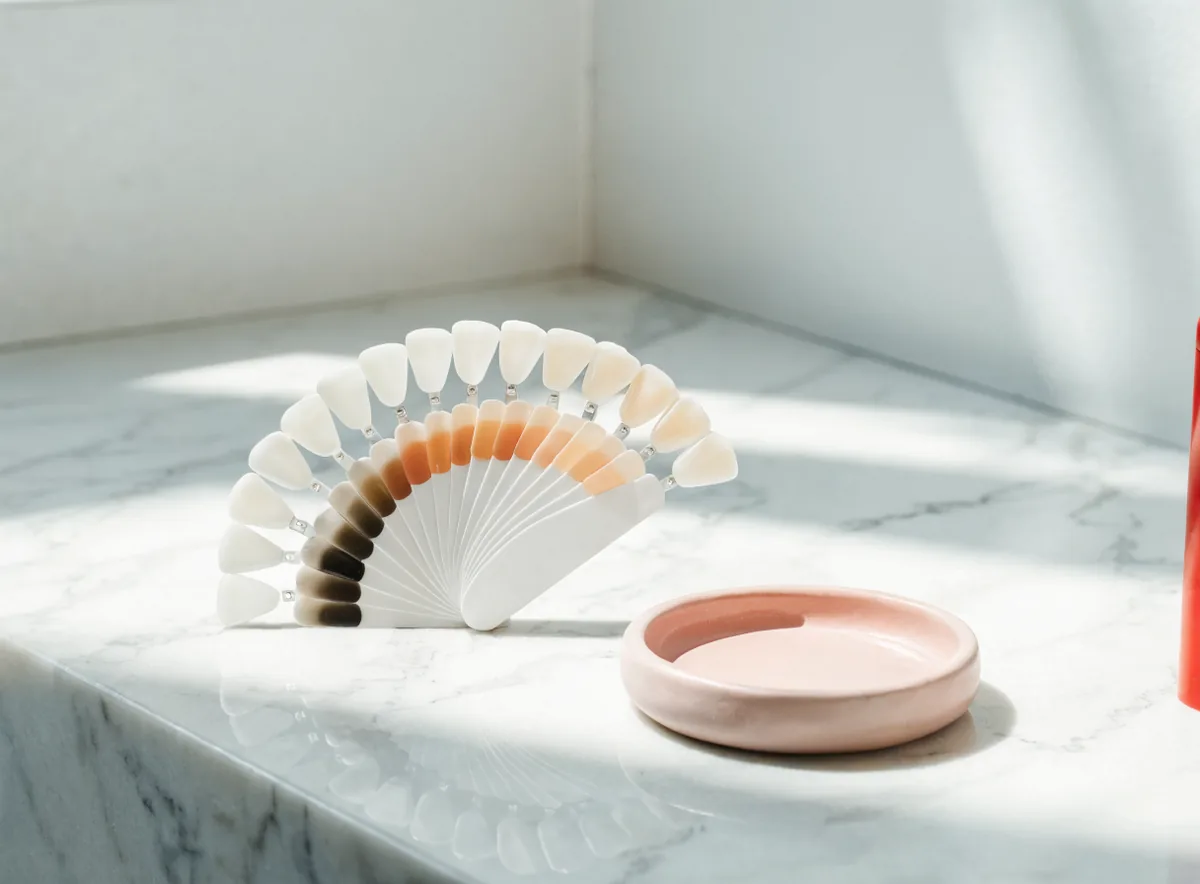
Often, yes. A common plan is veneers on healthy front teeth and a crown on one that is heavily filled or root-treated, with every restoration shaded to match so the smile looks uniform. If you would like whiter teeth overall, teeth whitening is usually done first, because neither veneers nor crowns change colour with whitening; the restorations are then matched to your whitened shade.
Veneers and Crowns at Plux Dental, Taman Melawati
At Plux Dental, a dental clinic in Taman Melawati, Kuala Lumpur, veneer treatment is led by Dr. Syaza, who heads our dental aesthetics work, and crown and bridge treatment is provided by Dr. Malek, who has over 40 years of restorative experience, alongside Dr. Syaza. Each tooth is examined and, where needed, X-rayed before we recommend a veneer, a crown or something simpler. We are easy to reach from Hulu Kelang, Wangsa Maju, Setiawangsa, Ampang and Gombak. You can see real veneer results, shown with patient consent, in our Smile Gallery.
Frequently Asked Questions
Is a crown the same as a cap?
Yes. “Cap” is the everyday word for a dental crown. Both describe a restoration that covers the whole visible part of the tooth, which is different from a veneer that covers only the front surface.
What lasts longer, veneers or crowns?
With good care, porcelain veneers and crowns both commonly last a decade or more, while composite veneers typically last around four to eight years. The health of the tooth underneath, your bite and your habits matter more than the type of restoration.
Are crowns stronger than veneers?
Yes. A crown encases the whole tooth and spreads biting forces, so it protects a weakened tooth far better. A veneer is strong once bonded, but it relies on healthy enamel underneath and is designed to change appearance rather than restore strength.
Can I have a veneer on a tooth that has had a root canal?
Sometimes. It depends on how much healthy tooth structure remains. Front teeth with little lost structure may suit a veneer, while back teeth and heavily restored front teeth usually need a crown. Your dentist will assess this with an examination and X-ray.
Which looks more natural, a veneer or a crown?
Both can look entirely natural on front teeth when they are well planned and shaded. Porcelain veneers are often favoured for healthy teeth because they preserve more of the tooth, and modern ceramic crowns can match them closely when a crown is needed.
Can veneers or crowns be whitened?
No. Whitening gel lightens natural enamel but does not change the colour of porcelain, ceramic or composite. If you want whiter teeth overall, whiten first and have the veneers or crowns matched to the new shade.
Can I bite into an apple with veneers?
Most people eat normally with veneers. It is sensible to cut hard foods such as apples into pieces rather than biting straight into them with your front teeth, and to avoid biting ice, bones or pens.
Can a veneer be changed to a crown later?
Yes. If a veneered tooth later becomes cracked or heavily restored, it can be prepared for a crown. Planning veneers conservatively in the first place keeps that option open.
Related Reading
Not Sure Whether You Need a Veneer or a Crown?
We will examine each tooth and give you a straight answer, including when something simpler would do. Send us a WhatsApp message to arrange a consultation.
WhatsApp +60 11-6140 8009